
Plasticine DAD
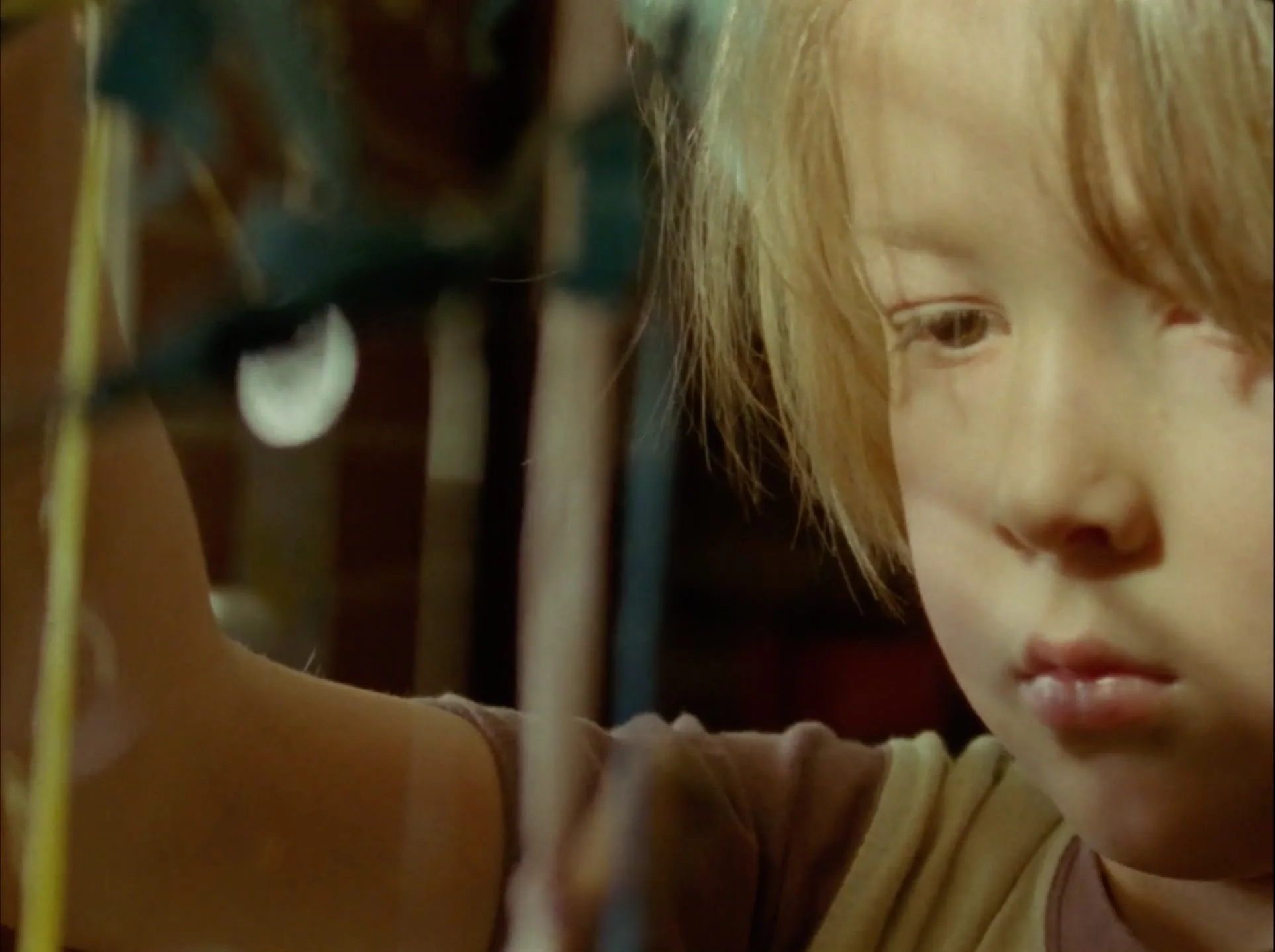
In an isolated pocket of rural Tasmania, five-year-old Lenny moves quietly through a home shaped by absence, routine, and unspoken volatility. As the adults around him drift between tenderness and collapse, his imagination begins to animate the ordinary, transforming small plastic figures, cracks in walls, and forgotten corners into sites of curiosity, connection, and survival.
Ursula Woods: Writer & Cinematographer
Charlotte Mungomery: Director
Make a donation
Help bring this project to life
Plasticine Dad is a short drama that follows five-year-old Lenny as he moves through a weathered home in rural Tasmania with his baby sibling and parents, Nella and Dano. Lenny longs for their attention, for someone to sit on the floor beside him and enter his games, but his father comes and goes without warning, and his mother spends long stretches behind a closed bedroom door. Around him, the house slowly fills with half-finished restoration projects; upturned chairs, exposed timber frames, loose springs and tins of varnish. Nella and Dano’s small furniture-flipping business bleeding into every corner of domestic life. Too young to fully understand the distance between his parents, the smoke that follows his father through the house, or the tension that hums beneath everyday routines, Lenny quietly absorbs it all. He learns which silences mean stay away, which footsteps signal danger, and how to make himself small.
In the absence of stability, Lenny turns toward play. A small plasticine toy ‘Tracksuit man’ becomes his closest companion. A bent face, strange textures and crooked smiles. In his hands, the ordinary begins to shift. Tracksuit Man turns his head. A cracked face smiles. These subtle ruptures in reality are never announced, only felt. For Lenny, imagination is not escape; rather a way of staying intact. In a world where adults struggle to hold themselves together, a child discovers that imagination may be the first place where safety, humour, and love can still exist.
-
Directors note from Charlotte Mungomery:
I grew up in regional Australia, surrounded by communities that carried both extraordinary warmth and quiet hardship. As a child, I witnessed family dynamics that often went unspoken. Homes where tenderness and violence lived side by side. Where people loved deeply, tried desperately, and still somehow failed each other. Those contradictions have stayed with me. With Plasticine Dad, I am not interested in pointing fingers; I am interested in circumstance. In the quiet systems that shape people and the way harsh environments can slowly deform even those with the best intentions. The film is told entirely through the perception of a child who cannot fully understand what he is witnessing, but feels everything. Children are often far more perceptive than adults allow. They are antennas for emotion, conflict, tenderness, fear. They absorb the unsaid. I want to plunge the audience into that state of perception, where time feels elastic, where cause and effect are blurred, where something heard behind a wall can feel bigger than something seen directly. Much of the pain in the film happens just out of frame. We hear it. Sense it. Anticipate it. But like Lenny, we are rarely given the full picture. Above all, I want to create a film that regards its characters with empathy. People who are flawed, alive, radiant, trying. People whose failures do not erase their humanity.
-
Our rushes are now back, and we have an incredible film ready to enter its final stage: post-production.
We are seeking funding to complete the edit, sound, music and colour to the highest possible standard, and to support submissions to major international festivals, including Cannes and Berlin.
We believe this film has the potential to travel far, champion Tasmanian filmmaking, and elevate the careers of its remarkable cast and crew. This was our dream passion project, which we pursued for many years.
Your support can help us finish the film and take it to the world.
-
Ursula Woods: Writer & Cinematographer
Based in southern Lutruwita/Tasmania, Ursula is a cinematographer and camera operator with extensive experience delivering work across film, television, music video, and art installations. Ursula brings an artistic sensibility to every project, and has a passion for experimental film techniques including hand processing in her home darkroom setup. In 2025, Ursula was awarded the Drew Llewellyn Scholarship by the Australian Cinematographers Society and was Film Artist in Residence at UTAS and Constance ARI’s Holding Space program.
-
The project has been conceived specifically for the landscapes, communities, and textures of the Huon Valley in rural Lutruwita/Tasmania.
This context houses the emotional and social architecture of the story. The Huon Valley carries a rare cinematic tension. Vast open landscapes sit alongside deep isolation. Extraordinary natural beauty exists in close proximity to economic hardship, generational labour, and communities shaped by endurance, self-reliance, and silence. These contradictions are central to the world of the film. We are interested in portraying this regional Australian context beyond stereotype or caricature. The landscape will function as far more than backdrop. It will saturate the mise-en-scène and operate as a participating element within the story. Wind through gum trees. Damp interiors. Rusting machinery. Long grass. Empty roads. The landscape mirrors the emotional terrain of the characters, at once beautiful, harsh, intimate, and unforgiving.